
Your child asks for a cartoon. You open YouTube, and suddenly there are hundreds to choose from. Some are all songs and bright colours; others tell a story your child wants to talk about afterwards. Where do you start?
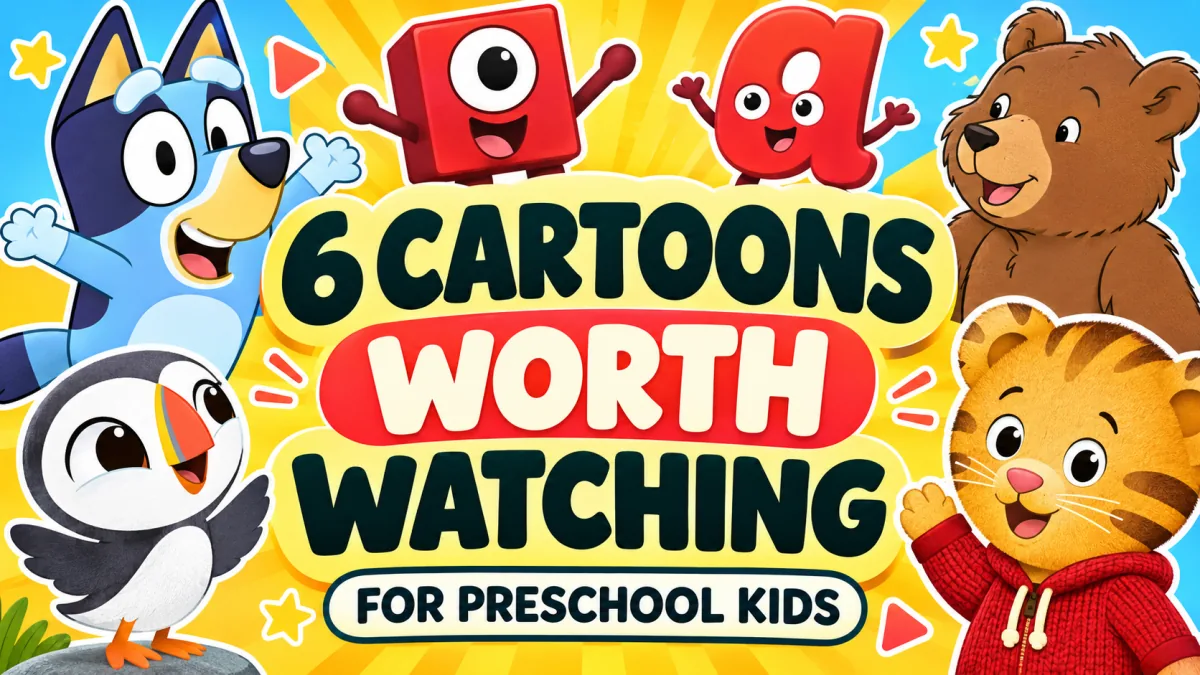
If cartoons are part of your family's routine, here are six options worth exploring together: Numberblocks, Alphablocks, Bluey, Little Bear, Puffin Rock and Daniel Tiger's Neighborhood. Each offers something different, from counting and letter sounds to friendship and imaginative play.
A quick guide to choosing a show
Start with what interests your child and what they can follow. This is a shortlist to help you choose, rather than a ranking or a promise that a particular show will improve development.
| If you're looking for… | Start with |
|---|---|
| Counting and early maths | Numberblocks |
| English letter sounds and blending | Alphablocks |
| Family stories and pretend play | Bluey |
| Gentle stories and imagination | Little Bear |
| Animals, nature and friendship | Puffin Rock |
| Feelings and everyday routines | Daniel Tiger's Neighborhood |
The links below lead to official channels or programme websites. They are starting points for parents: available clips, full episodes and subscriptions can vary by country and change over time. A channel may also contain long compilations, so check the individual video before pressing play.
1. Numberblocks: for children who enjoy numbers
Numbers become characters made of blocks, so children can see what happens when groups join, separate or change shape. It's a useful option when your child enjoys counting but is still working out what those numbers represent.
Start with the early number episodes. The series moves into more advanced maths too, so the newest upload may not be the right starting point. Explore Numberblocks or visit the official Numberblocks YouTube channel.
After watching: build two small towers with blocks. Ask, "How many altogether?" Let your child move and count them.
2. Alphablocks: for playing with English sounds
In Alphablocks, letters are characters whose sounds come together to make words. It gives families something to talk about beyond reciting the alphabet: how sounds blend and how changing a letter can change a word.
Choose early episodes if your child is just meeting letter sounds. More difficult word patterns can wait. The programme focuses on English phonics; it doesn't replace shared reading or learning through conversation. Explore Alphablocks or visit the official Alphablocks YouTube channel.
After watching: choose one familiar sound and find an object that starts with it. Keep it a game, rather than a test.
3. Bluey: for pretend play and family conversations
Bluey's family turns ordinary moments into games. The appeal is often what happens around the game: someone wants a different role, a plan goes wrong, or a character has to see another person's point of view.
It's worth watching together so you can talk about the parts your child notices. Some stories may need an explanation, and you can set your own boundaries around games they want to copy. Find clips on the official Bluey YouTube channel and viewing options on Bluey's official website.
After watching: let your child choose a pretend shop, bus or restaurant game. Ask them what each person will do.
4. Little Bear: for gentle storytelling
Little Bear follows small adventures with family and friends. Its gentle pacing leaves room for conversations and imagination, making it worth trying if your child enjoys listening to stories.
A quieter show won't suit every child or every moment. Try one story and see whether your child follows what happens. You can find the series on the official Little Bear YouTube channel; Nelvana's programme page describes its storytelling and preschool audience.
After watching: use a favourite toy to retell one part of the story. Your child can change the ending.
5. Puffin Rock: for little nature explorers
Oona and her little brother Baba explore an island with their animal friends. Nature, family and friendship sit at the centre of the stories, giving you plenty to notice together: an animal's home, a change in weather, or how one friend helps another.
Preview the story if your child is sensitive to animals getting into danger. The official Puffin Rock YouTube channel offers videos to explore; Cartoon Saloon's programme page explains the show's nature focus.
After watching: look for birds or insects on a walk. Ask, "Where do you think it lives?" You don't need to know every answer to be curious together.
6. Daniel Tiger's Neighborhood: for feelings and routines
Waiting, sharing and dealing with disappointment can be big challenges for a preschooler. Daniel Tiger uses everyday stories and short songs to give children and adults a way to talk about those moments.
Choose a story that matches something familiar, such as trying a new activity or taking turns. A song can become a reminder later, but children still need your help when feelings run high. Start with PBS KIDS' Daniel Tiger page, which links to videos and activities.
After watching: let two toys practise asking for a turn. Try the words together while everyone is calm.
Make YouTube a choice you make together
Choose the video before handing over a device. Check its length, turn off autoplay and agree on a stopping point. Official channels help you identify the publisher, but an adult still needs to choose the individual video and notice what appears around it.
Watch alongside your child when you can. One question is enough: "What do you think happens next?" or "How did they solve that?" You don't have to turn every episode into a lesson. The American Academy of Pediatrics' preschool media guide recommends choosing quality content, talking about it and keeping space for play and everyday interaction.
Can cartoons help my child learn English?
A story can introduce words to talk about together. Pause if your child wants an explanation, repeat a useful phrase, or use it later during play. Watching alone isn't the same as a conversation, so keep reading, singing and talking in your family's languages too.
Does a slower cartoon always mean a better choice?
Pacing is one thing to consider. Also look at the story, behaviour, language and how your child responds. Can they follow it? Do they want to ask questions or play afterwards? A label such as "educational" or "low-stimulation" doesn't tell you everything about an individual video.
From watching to doing
The next activity can be simple: count the cups at snack time, draw an animal, build a home for a toy, or act out a story. Give your child room to try their own ideas.
At Kingsbee, hands-on experiences are part of our preschool programmes. Families looking for weekend activities can also explore our Saturday Play Club in Kuchai Lama.
About this guide
This Kingsbee Preschool guide was inspired by Dr. Arif Khan's cartoon-ranking video. Our selection is separate from his rankings and draws on the official programme information linked above. The home activities are suggestions for families to try, rather than claims about guaranteed learning outcomes.
For more on sharing media with children, see the AAP's guidance on watching together and PBS KIDS' explanation of Daniel Tiger's approach.